



Tiny but mighty, bees and other pollinators are vital for the health and well-being of both people and the planet.
“In Samoa, beekeeping is peaceful and empowering at the same time. It connects us to nature and teaches discipline and respect for ecosystems.” – Fetu Leapai-Saili, Samoan beekeeper
As they buzz around carrying pollen from one flower to another, bees enable plants to reproduce. In so doing, they contribute directly to food security: around 75% of all crops (and 35% of global food production) rely on pollinators. Bees are also key to the preservation and regeneration of natural forests, as they pollinate 90% of wild flowering plants. Moreover, since they serve as indicators of environmental health, protecting them means safeguarding biodiversity and critical ecosystem services. Given that the livelihoods of two billion small farmers around the world depend on these pollinators, the beekeeping industry can help both local communities and nature thrive.
Bee Educated!
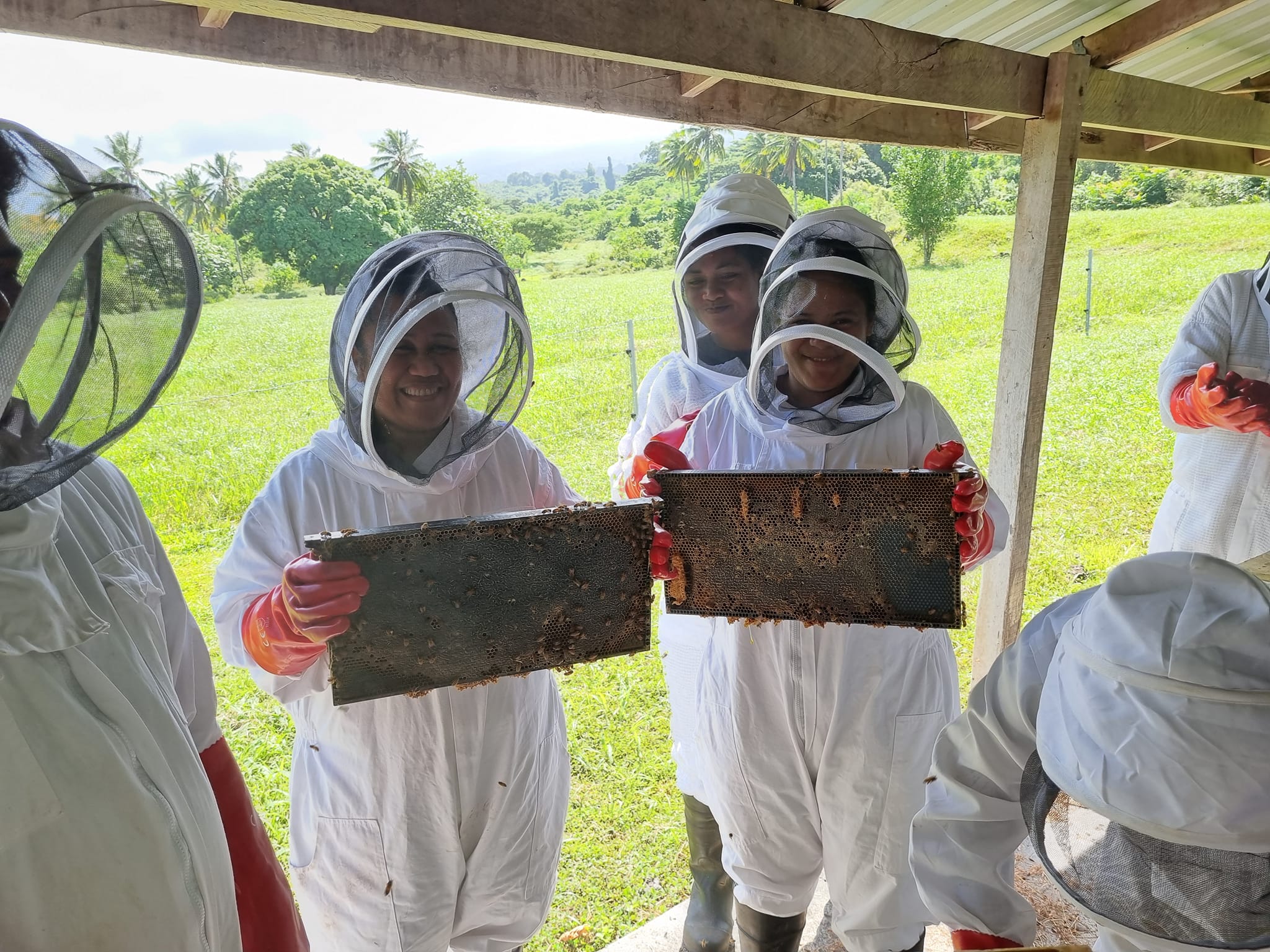
In Samoa – a Small Island Developing State (SIDS) in the South Pacific Ocean – the buzz has been growing thanks to a locally-led initiative called ‘Bee Educated!’. With support from the Global Environment Facility (GEF) Small Grants Programme (SGP), implemented by the United Nations Development Programme (UNDP), ‘Bee Educated!’ is not just about producing honey; it is also about empowering local communities, particularly women, and fostering a sustainable relationship with nature.
“Women are the heartbeat of agriculture in Samoa, and beekeeping strengthens that even more.” – Fetu Leapai-Saili, Samoan beekeeper
Beating Heart
At the centre of this initiative are people like Fetu Leapai-Saili. Born and raised in Samoa, she proudly carries two matai (chiefly) titles: Pauli from the village of Salelologa, on the island of Savai’i, and Uitualagialemalietoa from the village of Maninoa, on the island of Upolu. These family titles, bestowed through a traditional ceremony, represent not just lineage, but also a deep commitment to leadership, service, and responsibility to family and community.
Fetu first learned about beekeeping in 2022, when she attended a workshop by the Samoa Apiculture Organisation (SAO), which developed and implemented the ‘Bee Educated!’ project. She recalls: “That session sparked my curiosity and I discovered a strong passion for beekeeping – not just as a farming method, but as a lifestyle that supports food security and environmental sustainability.”