1739 Documents found
Energy Saving Tips developed within the project "The use of environmentally friendly alternative technologies on the territory of the Kostyukovichi district (installation of solar-powered street lamps) as a way to reduce carbon dioxide emissions"
BLR/SGP/OP7/Y1/CORE/CC/20/02

Booklet on eco business ideas developed within the SGP project "The introduction of energy-efficient technologies in the SOS-children’s village Marjina Gorka and building the capacity of socially vulnerable families in the Pukhovichi region to increase socio-economic stability"
BLR/SGP/OP6/Y5/CORE/CC/20/01

Brochure from the webinar "Women's Initiative as a Factor in the Development of Renewable Energy in Small Towns and Rural Areas", organized jointly with the UNDP project "Removing barriers to the development of wind energy in Belarus"
In rural economies, land is the basis for all livelihoods where informal mining, agriculture, and logging coexist as part of a multifunctional working landscape. Mining is often deeply entrenched in the cultural traditions of informal, artisanal, and small-scale mining (ASM) communities. The mining sector represents an emerging rural economy that provides livelihoods for millions of households worldwide. Approximately 20 million people work in artisanal and small-scale mining accounting for 45% of all ASM activity. In Sub-Saharan Africa, the adverse impacts of abandoned mines on human and eco...

This is the fourth issue of the GEF SGP Trinidad and Tobago ENewsletter, covering the period January to March 2021

This annual report covers all the ongoing and completed projects for the period 2019-2020

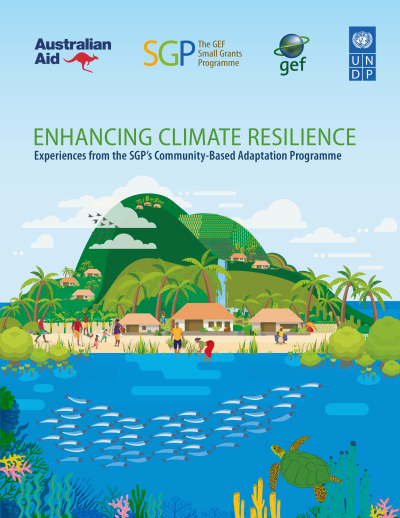
For the past 10 years, local communities and societies have been investing in resilience-building with support from the Small Grants Programme (SGP), which is supported by the Global Environment Facility and implemented by the United Nations Development Programme, with partnership and funding from the Australian Government’s Department of Foreign Affairs and Trade (DFAT). By enabling local communities to adapt to the impacts of climate change based on their specific environmental, social, and economic contexts, the Community-Based Adaptation Programme (CBA) has helped enhance climate resili...
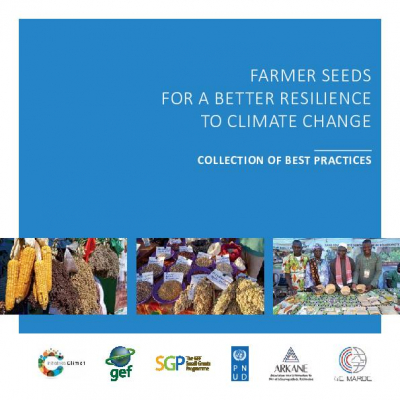
In many African countries, agriculture still accounts for more than two-thirds of the labour force and it is still often a subsistence activity, sometimes supplemented by a few cash crops. However, monetary income from
agricultural activity is often modest; they do not allow farmers to invest in their farms. This results in low yields and insecurity in the event of climate change. The adoption of the principles of agroecology offers real prospects for the development of agriculture while respecting the natural resources and health of the inhabitants. The transition to agroecology is, particu...
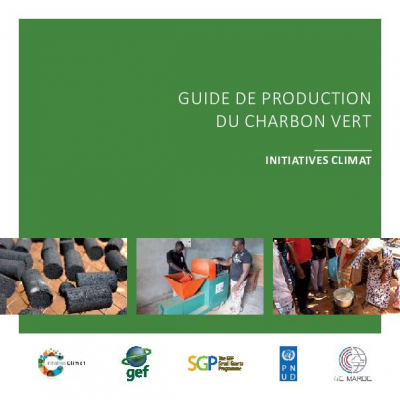
In Africa, access to firewood for cooking and heating is becoming increasingly difficult. Some regions have diminishing forest cover and desertification. In rural areas, collecting firewood is a difficult task, often for
women and girls. The increase in logging bans in some areas is forcing firewood collectors to find new sources of supply, which are increasingly far from their living areas. In addition, charcoal production is highly regulated and even banned in some regions or countries. In urban areas, prices of firewood and charcoal have risen sharply in recent decades due to its sca...
Page 45 of 194