


Tuesday, 21 July 2020 11:00
Expanding models of rice_shrimp cultivation in Bac Lieu province.
Written by nguyen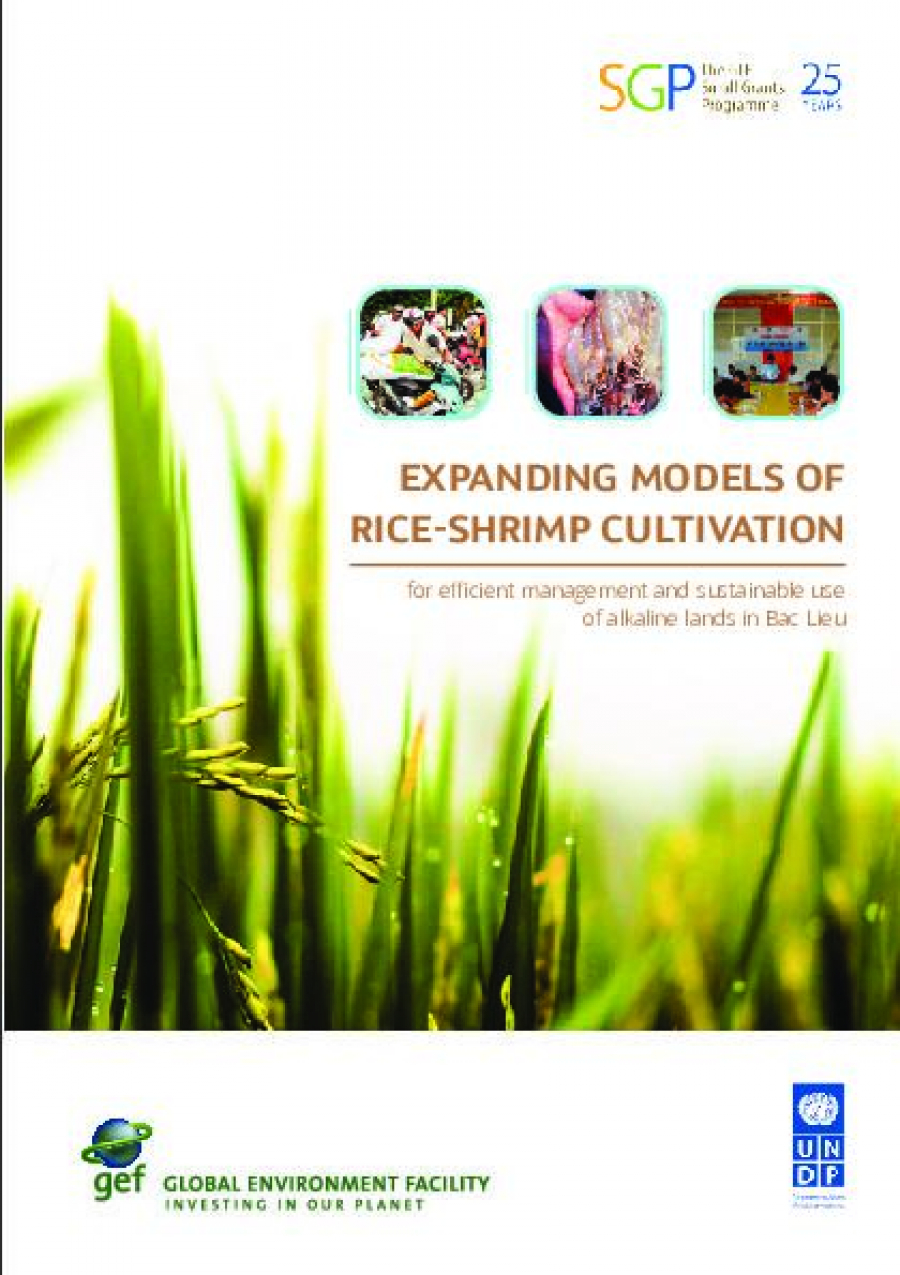
- Type: Case Study, Country Publication
- Source: Farmers’ Association of Bac Lieu Province
- Languages:
- Focal Areas: Biodiversity
- Priority Groups: Indigenous Peoples, Women
- Countries: Viet Nam
- Region: Asia and the Pacific
The rice-shrimp model is a closed model that is mutually supportive and a suitable production model in the conversion zone under current climate change conditions. The production area under the rice-shrimp model has gradually been increasing since the conversion in 2001 with 5,800 hectares; at present, Bac Lieu province now has nearly 30,000 hectares of this model (Bac Lieu Department of Agriculture and Rural Development, 2016. Report on effective models). There have been many demonstration models, science topics, projects, technical training courses for producers, etc. with the aim of contributing to the improvement of productivity and economic efficiency of the model. Considering at the average level, the economic efficiency of the model compared to the first 5 years of the conversion has much improved. However, the rice-shrimp farming model still faces many challenges and do not correspond with the potential and advantages of the region, especially in the shrimp crop. Besides, due to the fact that during the shifting period from inefficient rice cultivation to aquatic poly-culture, irrigation works are not quite suitable, many sub-areas lack of fresh water for rice cultivation and are passive, mainly depend on the weather; sources of high quality shrimp fry have not been paid due attention by farmers; water environment is polluted and shrimp diseases in this model are much more and
the frequency is closer, some production sub-areas pay more attention to shrimp and are less interested in rice; experience in production of local people is not yet much, mainly the farming activities follow the old practices, a number of farmers lack of investment capital as well as lack of new technical information, and hence the economic efficiency of this model for many years is still low compared to the potential of production land, the risk of disease and pests is high.
Recognized the above-mentioned issues, in 2015 the UNDP-GEF SGP supported the Bac Lieu Farmers’ Association a project entitled “Expanding models of rice shrimp cultivation for efficient management and sustainable use of alkaline lands in Bac Lieu“. The project aims to raise the awareness and capacity of the community to manage resources and water, and effectively exploit the acid sulphate soil areas under wet rice cultivation through expanding and developing the model of rice-shrimp cultivation to produce organic products, and contribute to poverty reduction and new rural area development.