


Thursday, 15 September 2022 10:51
Toward a sustainable Post COVID future for indigenous peoples
Written by aime.kamga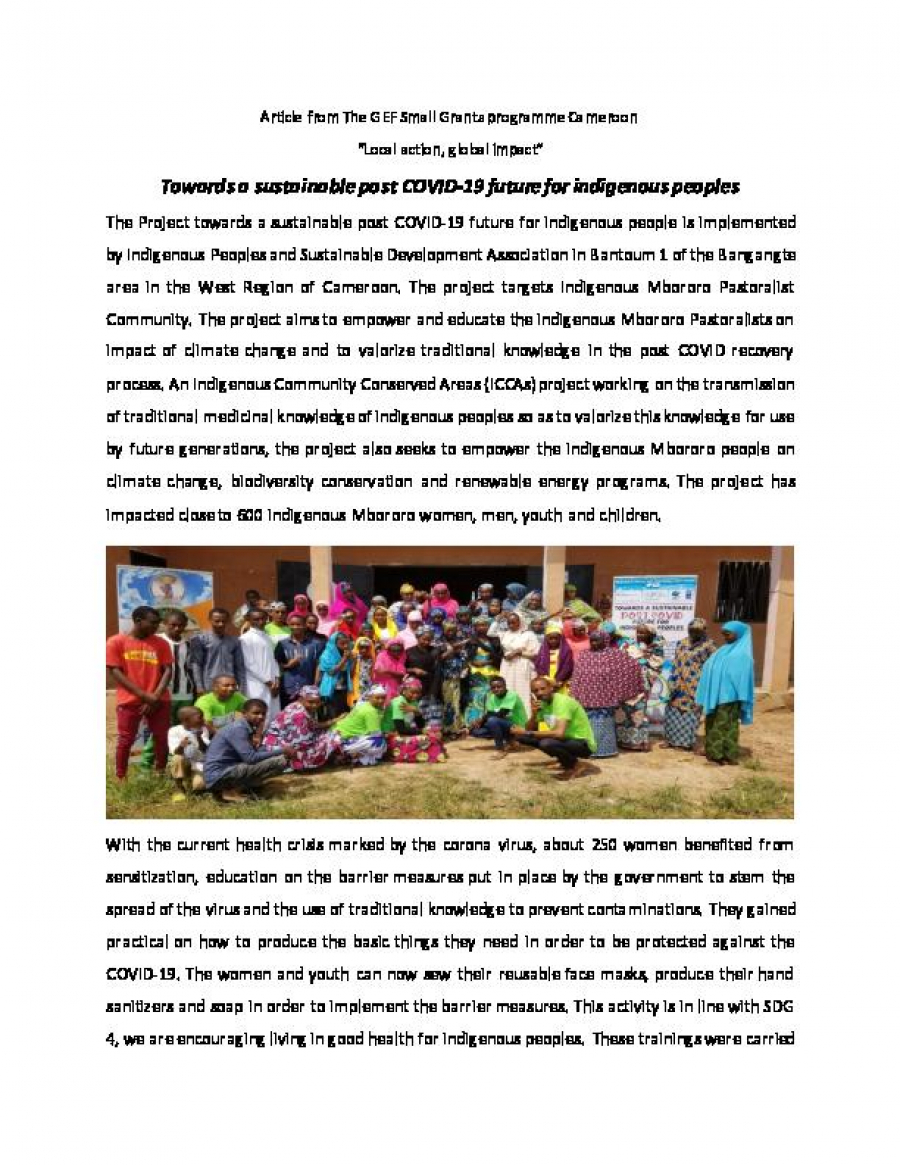
- Type: Fact Sheet, Country Publication
- Source: Indigenous Peoples and Sustainable Development Cameroon (IPSD)
- Languages:
- Focal Areas: Climate Change Mitigation
- Priority Groups: Indigenous Peoples, Women, Youth
- Countries: Cameroon
- Partnerships: ICCA-GSI
- Region: Africa
Bangangte is a locality situated in the Nde division of the west region with a population of about 45000 inhabitants constituted of the Bamileke and equally the Mbororo Indigenous pastoralist’s communities. They have as main activities cattle rearing, petite businesses and equally farming in small areas for their livelihoods. They lived in harmony with their neighbours. There are many internally displaced Mbororo from the Northwest Region, who have settled in Bangangte, and their situation is precarious which needs attention in this post COVID 19 moment. Like other rural communities, this community is confronted with the ugly realities of poverty, lake of means to recovery after COVID 19, climate change such as temperature increases, irregular changes in seasons, the drying off of streams and an increase in tropical diseases like malaria, cholera, other water borne diseases, and eyes problems due to exposure to excessive smoke. There are the problems of energy, land degradation, soil erosion and at times landslides.
Faced with these challenges, the situation of the inhabitants is becoming precarious. Thus, there is need for urgent actions to address such problems so that the inhabitants can enjoy sustainable development.