


The seventeenth session of the Conference of the Parties (COP17) of the United Nations Convention to Combat Desertification (UNCCD) will take place in Ulaanbaatar, Mongolia, from 17 to 28 August 2026, under the theme Restoring Land. Restoring Hope.
UNCCD COP17 is more than a major international conference on land. It represents a pivotal opportunity to accelerate action on land restoration, drought resilience, and sustainable development through a people-centred approach. The United Nations Convention to Combat Desertification (UNCCD) is the global voice for land and one of the three Rio Conventions, alongside climate and biodiversity. COP17 is the first of the three Rio Convention COPs taking place in 2026, offering an important opportunity to strengthen synergies across global efforts on land, nature, and climate.
Hosted by Mongolia under the theme Restoring Land. Restoring Hope., COP17 comes at a critical moment. Land degradation already affects up to 40 percent of the world's land surface, with profound implications for food security, water resources, livelihoods, economic stability, and human well-being. The conference will bring together governments, civil society, Indigenous Peoples, pastoralists, youth, scientists, development partners, and the private sector to advance practical, investable solutions to combat desertification, land degradation, and drought.
Taking place during the International Year of Rangelands and Pastoralists (IYRP 2026), COP17 also presents a unique opportunity to elevate the importance of rangelands and pastoralist livelihoods on the global agenda. With more than half of the Earth's land surface covered by rangelands and hundreds of millions of people depending on them directly for their livelihoods, the conference aims to catalyse greater action, investment, and partnerships for sustainable rangeland management, restoration, and resilience.
As the first East and Central Asian country to host a UNCCD COP, Mongolia is using COP17 to highlight the role of healthy land as a foundation for food security, water security, resilience, and sustainable development. The conference is expected to catalyse collective action on rangelands, drought resilience, water, food systems, and soil health, while helping translate global commitments into measurable progress on the ground.
Visit the official UNCCD COP17 website: UNCCD COP17
Official host country website: UNCCD COP17 Mongolia
GEF SGP Engagements at the COP17
Green Zone SGP Local Action Pavilion
The GEF Small Grants Programme (SGP) and UNDP Pavilion at the UNCCD COP17 Green Zone will serve as a dynamic showcase of community-led solutions for land restoration, biodiversity conservation, climate resilience, and sustainable livelihoods. Under the theme “From Local Action to Global Impact,” the pavilion will feature 11 SGP-supported initiatives from Mongolia, highlighting practical experiences in rangeland restoration, forest restoration, biodiversity conservation, women-led environmental action, local enterprises, traditional knowledge, and civil society engagement. Through exhibitions, films, case studies, sustainable livelihood products, interactive displays, and daily dialogue sessions, visitors will have the opportunity to engage directly with local practitioners and community leaders. Particular emphasis will be placed on pastoralist stewardship, Indigenous and local knowledge, women’s leadership, community-based conservation, and the role of grassroots organizations in advancing land restoration and resilience. The pavilion will also provide a platform for civil society organizations, pastoralist groups, and local communities to bring their experiences and policy messages into global discussions taking place at COP17, demonstrating how local action contributes to global environmental goals.
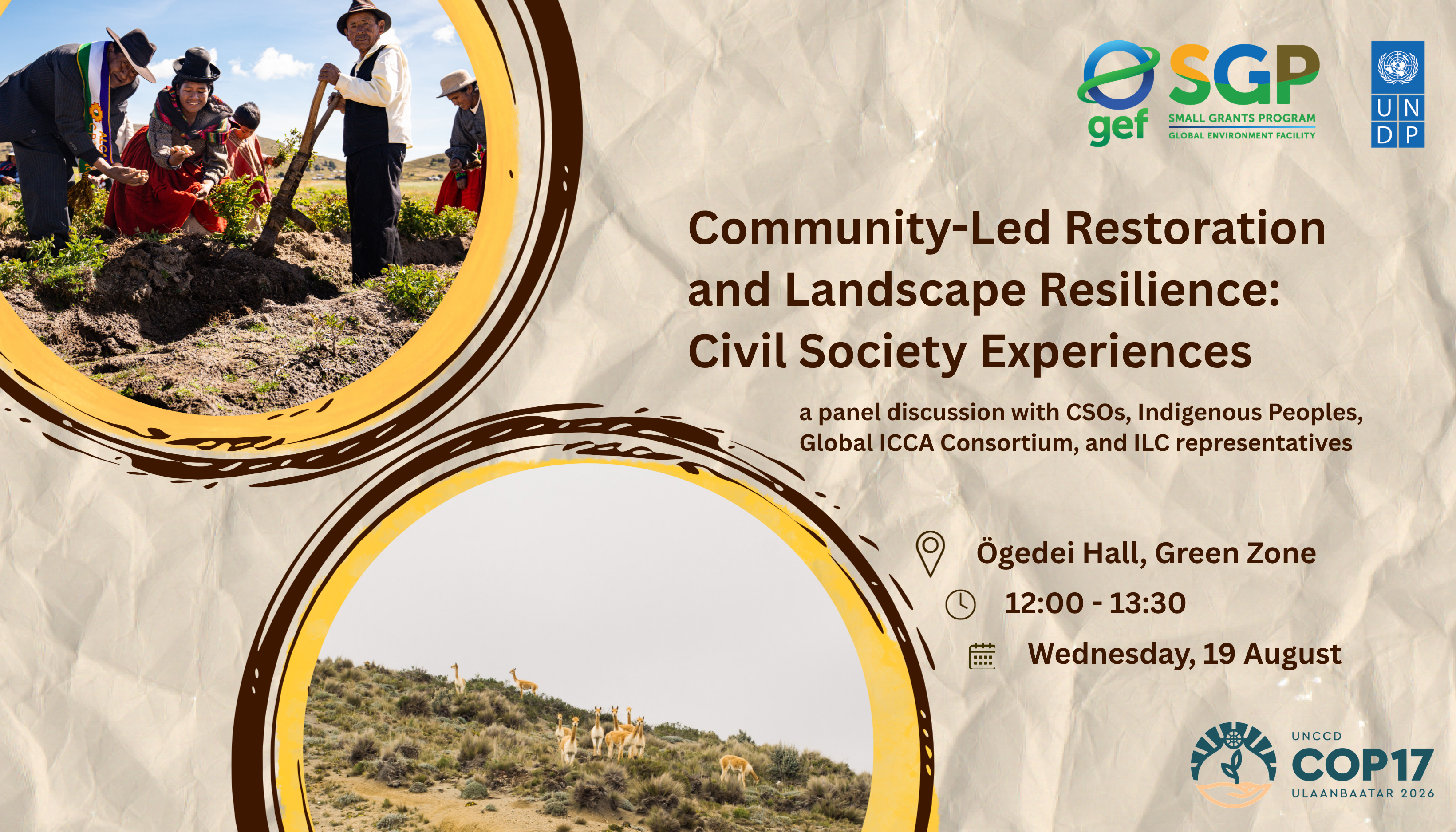
Community-Led Restoration and Landscape Resilience: Civil Society Experiences.
Location: Ögedei Hall, Green Zone | Date and Time: Wednesday 19 August, 12:00–13:30
This panel discussion will explore how civil society organizations, Indigenous Peoples, pastoralists, and local communities are driving landscape-scale restoration and resilience through locally led action. Convened by the GEF Small Grants Programme (SGP), the event will bring together representatives from the Global ICCA Consortium, the International Land Coalition (ILC), and grassroots organizations supported by SGP to share their experiences in restoring degraded landscapes and strengthening community stewardship. Discussions will focus on barriers and enabling conditions for successful restoration, including land governance, policy support, restoration practices, and access to sustainable finance. Through perspectives from Africa, West and Central Asia, and pastoralist communities, the event will highlight how community-led approaches are advancing land restoration while strengthening livelihoods, rights, and environmental resilience. The session will be moderated by Terence Hay-Edie, Senior UNDP Programme Manager and Advisor to the GEF Small Grants Programme.
Chinese Experience in Collaborative Development of Community-Led Grassland Governance and Climate Change Adaptation
Location: China Pavilion, Blue Zone | Date and TIme: Wednesday 19 August, 13:15–14:45
This side event will showcase community-led approaches to grassland governance, climate adaptation, and pasture restoration from China and beyond. Bringing together pastoralist representatives, community organizations, researchers, government stakeholders, and development partners, the session will highlight practical experiences in sustainable rangeland management, climate resilience, biodiversity conservation, and livelihood diversification. Through case studies and dialogue, participants will explore how local communities can play a central role in addressing land degradation, adapting to climate change, and strengthening resilience in pastoral landscapes. The GEF Small Grants Programme (SGP) will facilitate this important discussion, highlighting how support to civil society organizations and local communities can help scale innovative approaches to community-led grassland governance and climate adaptation.
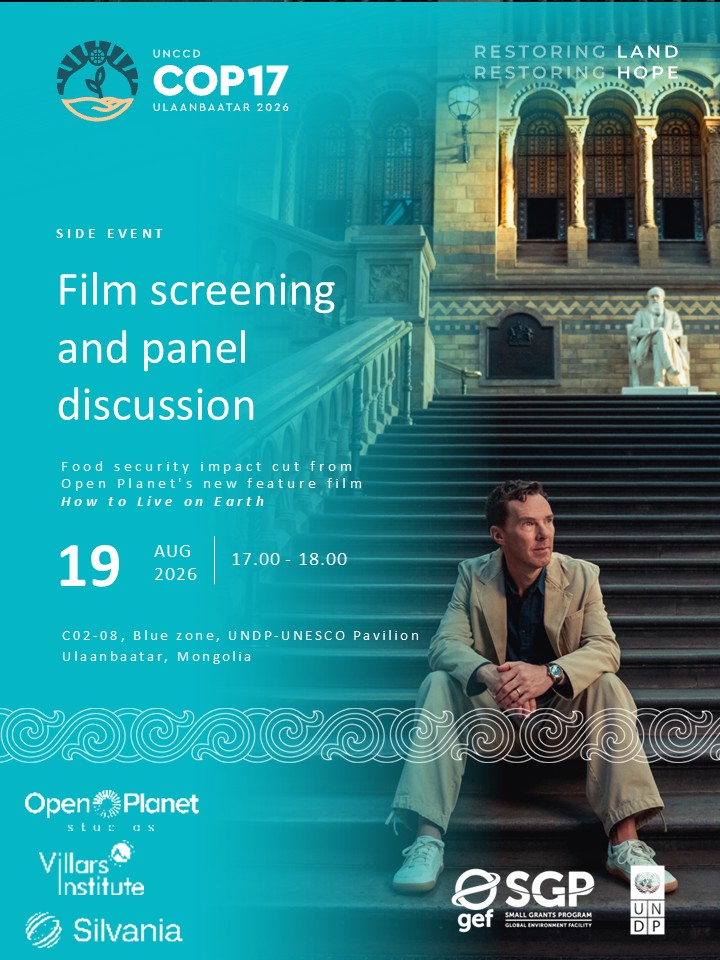
Film Screening and Panel Discussion: How to Live on Earth
Location: UNDP-UNESCO Pavilion, Blue Zone | Date and time: Wednesday 19 August, 17:00–18:00
Join Open Planet, the GEF Small Grants Programme (SGP), and partners for a screening of selected excerpts from the new feature film How to Live on Earth, narrated by Benedict Cumberbatch. The screening will be followed by a panel discussion exploring the links between environmental stewardship, food systems, and community-led solutions to global challenges. The event will highlight the role of local communities and civil society in building resilience and restoring ecosystems, while showcasing inspiring stories of people taking action for a more sustainable future.
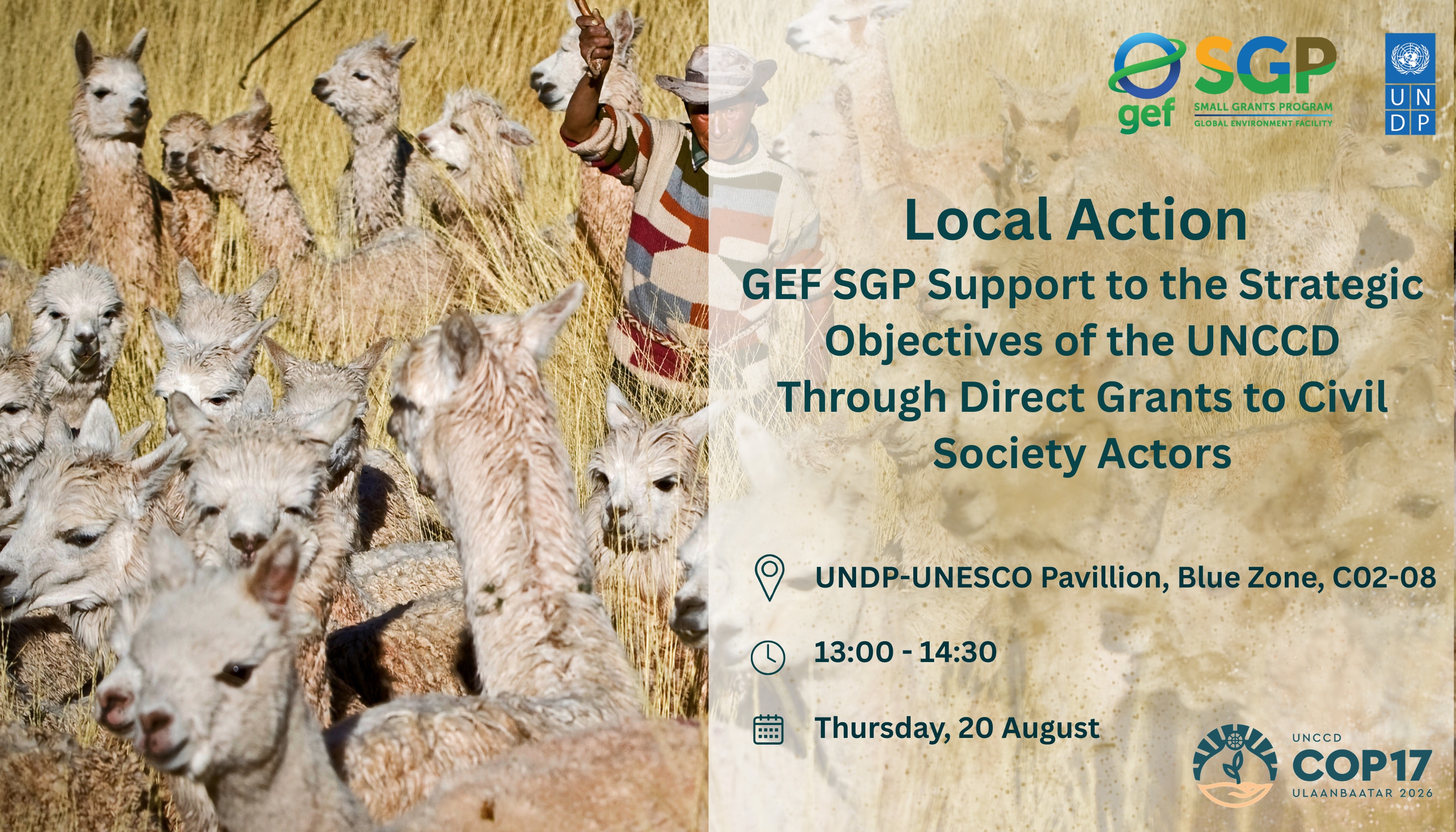
Local Action: GEF SGP Support to the Strategic Objectives of the UNCCD Through Direct Grants to Civil Society Actors.
Location: UNDP-UNESCO Pavilion, Blue Zone | Date and time: Thursday 20 August, 13:00–14:30
This side event will highlight how the GEF Small Grants Programme (SGP) contributes to the strategic objectives of the UNCCD through direct support to civil society organizations, Indigenous Peoples, local communities, and grassroots actors. With a particular focus on GEF Operational Phase 8 (OP8), the session will showcase innovative and locally led approaches to land restoration, sustainable rangeland management, biodiversity conservation, climate resilience, and sustainable livelihoods. Drawing on experiences from around the world, the event will demonstrate how community-driven action and strengthened partnerships can generate lasting environmental and social benefits while advancing global commitments on land degradation neutrality and ecosystem restoration.
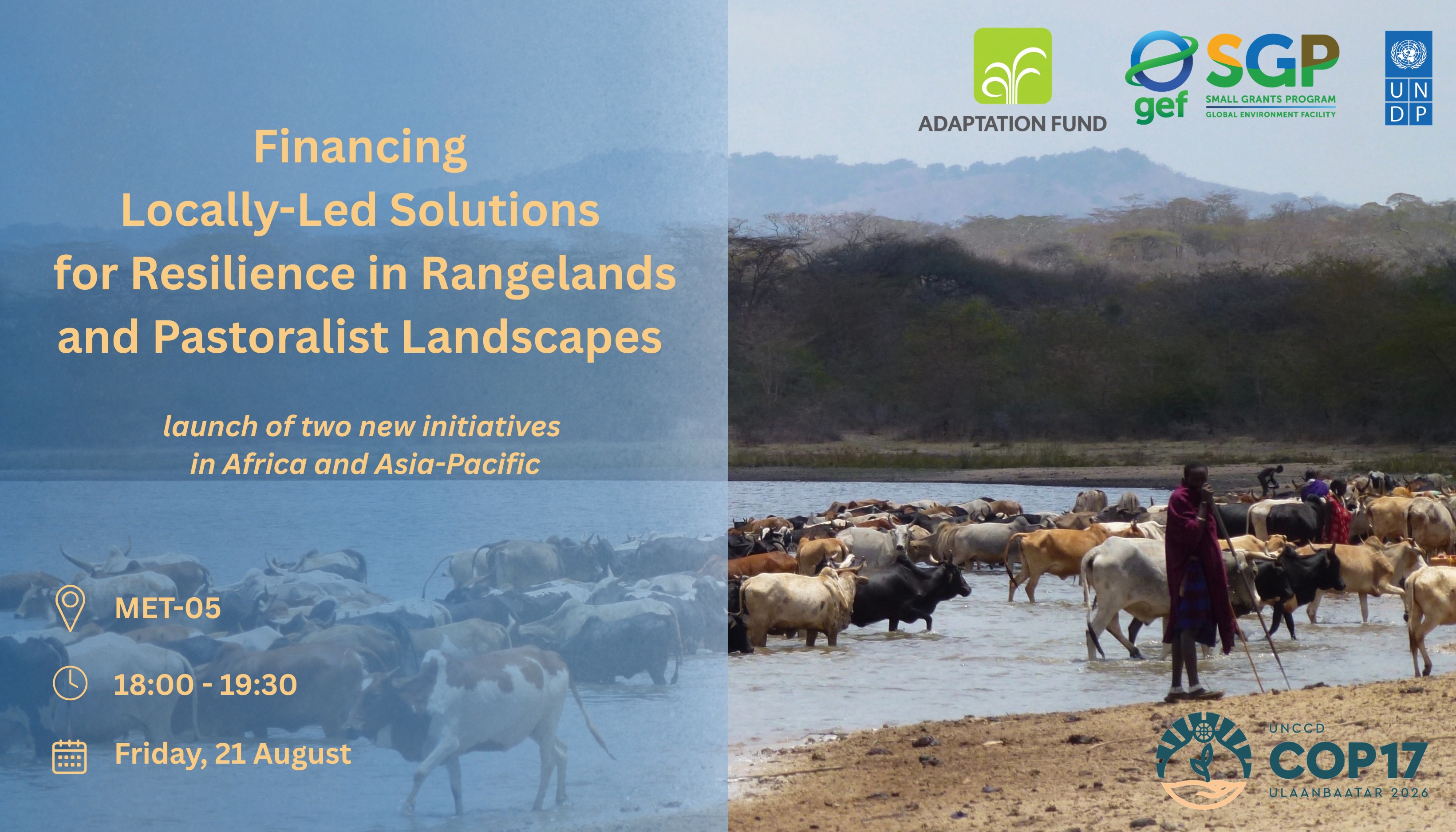
Financing Locally Led Solutions for Resilience in Rangelands and Pastoralist Landscapes.
Location: MET-05, Blue Zone | Date and time: Friday 21 August, 18:00–19:30
This side event will explore how locally led adaptation can strengthen resilience in rangelands and pastoralist landscapes through direct support to Indigenous Peoples, local communities, and civil society organizations. The event will mark the launch of two new UNDP-designed Adaptation Fund initiatives in Africa and Asia-Pacific and highlight the role of the GEF Small Grants Programme (SGP) as a key delivery mechanism for scaling locally led action. Through presentations and a panel discussion featuring pastoralist, Indigenous Peoples, and community representatives, participants will explore approaches to climate adaptation, sustainable rangeland management, traditional knowledge, inclusive governance, and opportunities to expand local solutions across regions.
Indigenous Peoples High-Level Special Event: From Sacred Lands to Shepherding the Future.
Location: Blue Zone | Date and time: Wednesday 26 August, 11:30–13:00
This high-level event will bring together Indigenous Peoples' leaders, governments, UN agencies, and partners to highlight the role of Indigenous knowledge, customary governance, and cultural connections to land in advancing restoration, biodiversity conservation, and climate resilience. The discussion will explore how Indigenous Peoples' leadership can contribute to addressing desertification, land degradation, and drought, while strengthening participation in decision-making and implementation of the UNCCD agenda.
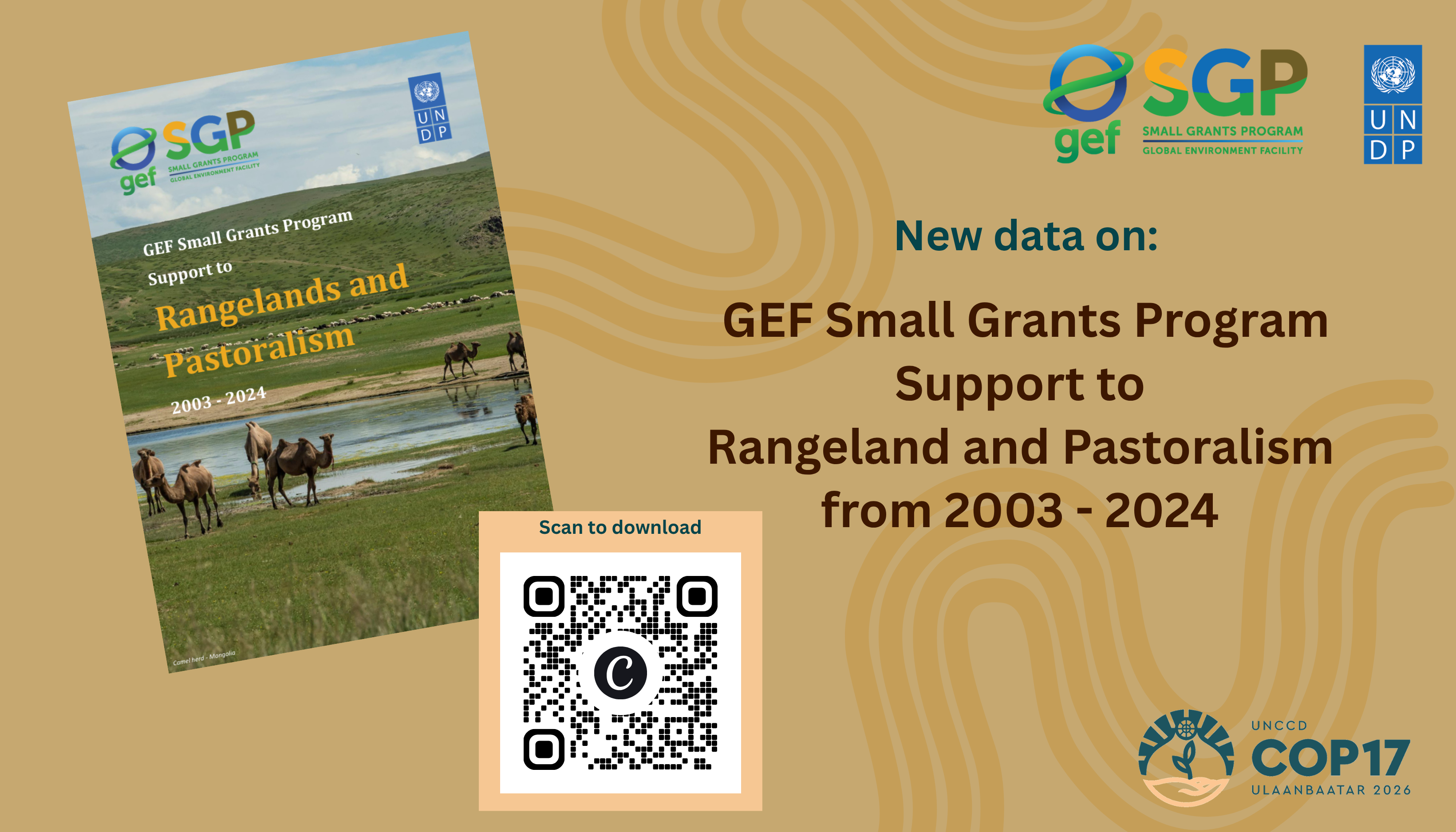
New Briefing Note: GEF SGP Support to Rangelands and Pastoralism (2003–2024).
To mark the International Year of Rangelands and Pastoralists (IYRP 2026) and UNCCD COP17, the GEF Small Grants Programme (SGP) has produced a new briefing note presenting the first portfolio-wide analysis of SGP support to pastoralism, livestock-based livelihoods, and rangeland management. The publication identifies 2,094 projects worth approximately USD 65.9 million across 121 countries between 2003 and 2024, highlighting the global scale of community-led action in pastoral landscapes. The briefing also features case studies from China, Mongolia, Peru, and Tanzania, demonstrating how local communities are advancing rangeland restoration, biodiversity conservation, climate resilience, sustainable livelihoods, and land governance. The publication provides new evidence on the contribution of civil society, Indigenous Peoples, pastoralists, and local communities to achieving global environmental goals. The findings are based on a preliminary portfolio scan and should be considered indicative pending final validation of the data.