




As foothills and savannahs give way to lush jungle in Colombia’s Guaviare department, towering outcrops of some of the oldest rock formations on Earth rise as sentinels watching over crystal-clear streams and hidden caves decorated with ancient rock art.
Walking along meandering trails in the dense rainforest of this fascinating region, every rustle of leaves sharpens the senses. In the stillness, you may feel a subtle awareness of being observed by something powerful.
"Even if we cannot see it, we may hear it roar or see its tracks." - Diego Diaz, local tour guide
The jaguar (Panthera onca).
The third-largest wild cat on the planet, it is not only an apex predator, but also a key indicator of a thriving ecosystem.
For anyone visiting Guaviare today, following the jaguar’s trail is a privilege. But not long ago, what now inspires wonder once inspired fear – the jaguar’s footpaths were followed not with cameras, but with shotguns.
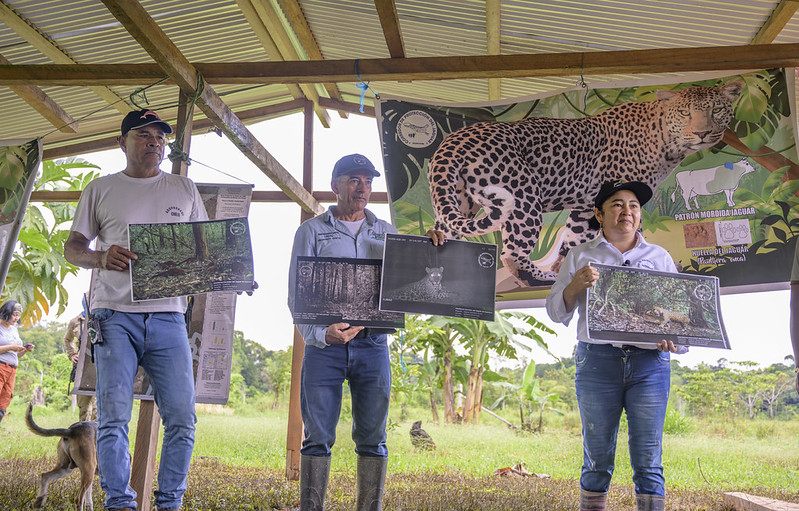
From Conflict to Coexistence
Conflicts between these big cats and local communities have long been an issue in this region. Growing human populations, hunting, and unsustainable cattle-ranching led to deforestation and loss of connectivity between ecosystems. As natural prey declined, hungry jaguars increasingly targeted livestock and domestic animals, triggering retaliatory killings that threatened the species’ survival.
“The jaguars involved in these conflicts were practically the last ones remaining in the territory.” – Jeffer Toloza, from the local association Fantasías de Cerro Azul
To address this problem while protecting both wildlife and local livelihoods, a community governance strategy launched in 2021 brought local organizations together to establish the Jaguar Protection Corridor in Guaviare as a model for conservation, sustainable development, and reconciliation with nature.
With support from the United Nations Development Programme (UNDP) and in partnership with the World Wide Fund for Nature (WWF), the Corporation for the Sustainable Development of the Northern and Eastern Amazon, and the Ministry of Environment and Sustainable Development in Colombia, the strategy aimed to transform the relationship between local communities and the jaguar by replacing conflict with coexistence.
In 2023, the Global Environment Facility Small Grants Programme (GEF SGP), implemented by UNDP, joined the effort to provide technical and financial support directly to 20 local organizations to develop community‑based ecotourism initiatives to strengthen both conservation and local livelihoods within the Corridor.