



A coral reef is like a bustling city in an alien world—built not of concrete and steel, but of tiny, living creatures. As corals grow into large colonies, their hard skeletons create an intricate maze of shelters, feeding grounds, and breeding spaces for countless organisms.
Coral reefs cover less than 1% of the ocean but support over 25% of all life in it—the highest biodiversity of any ecosystem on the planet.
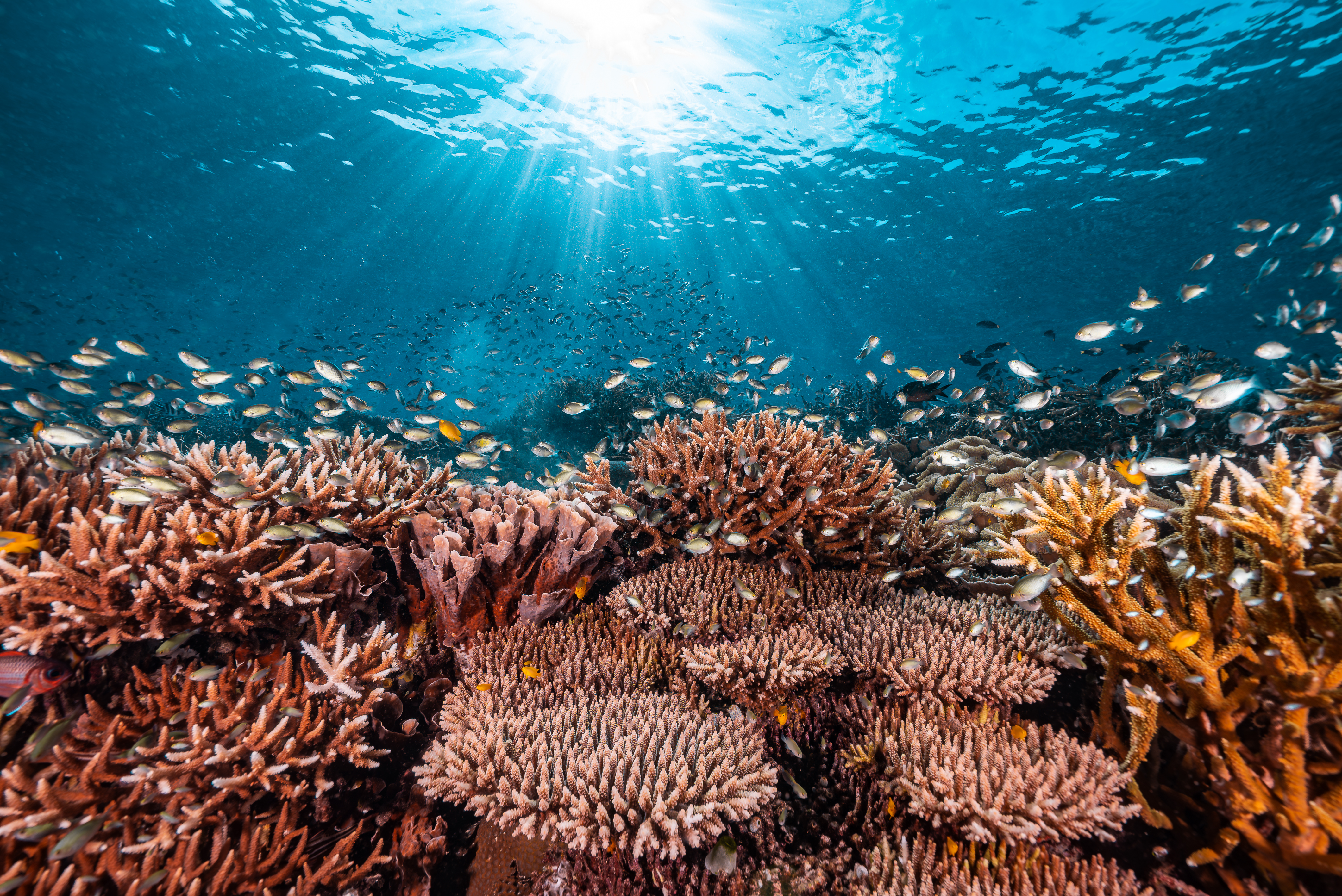
Photo: Noemi Merz/Ocean Image Bank
Off the eastern coast of Mauritius, one such thriving underwater metropolis teemed with life at Pointe d'Esny. The reef flashed with vibrant colours and sizzled with crackling sounds as schools of fish darted through branching alleys like cars at rush hour. Small crustaceans crept into hidden crevices, while large predators patrolled the blue waters above, waiting for an opportunity to ambush their prey.
Until disaster struck.
On 25th July, 2020, the 300-metre-long cargo vessel MV Wakashio ran aground at Pointe d'Esny, tearing a catastrophic gash through the reef like an airplane crashing into the living city. The wreck didn’t just crush corals under its steel hull, it also kicked up a suffocating cloud of sediment that choked whatever life had survived the initial blow.
For days, the Wakashio was stranded in the middle of the reef. Battered by powerful waves, it carved a devastating scar as it scraped through the corals for over a kilometre.Then, on 5th August, the grounded ship began leaking a thick, toxic black sludge.
In a race against time, authorities pumped out all the heavy fuel oil they could from the ship’s hull before it finally broke in two on 15th August. Despite these efforts, roughly 1,000 tonnes of oil had already spilled into the sea, causing widespread damage to the surrounding marine ecosystem, including the wildlife sanctuary of Blue Bay Marine Park.
It was the worst environmental disaster in Mauritius’ history.
Natural Healing
Dr. Nadeem Nazurally couldn’t just stand by as the crisis unfolded. A marine scientist and coral restoration expert born and raised in Mauritius, he knew exactly how to salvage what was left of the reef at Pointe d'Esny. With support from the Global Environment Facility Small Grants Program (GEF SGP), implemented by the United Nations Development Programme (UNDP), Nadeem led the local NGO EcoMode Society in a project to rescue the genetic legacy of the affected corals while empowering the local community to protect their waters.