












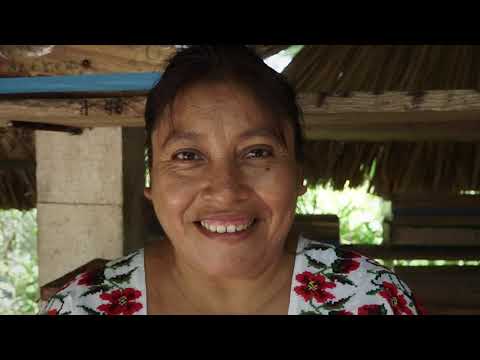


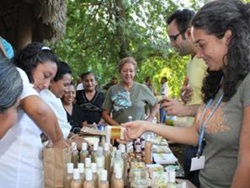
 On the occasion of the 16th Conference of the Parties to the UN Framework Convention on Climate Change (COP16), the GEF Small Grants Programme (GEF-SGP), the Bureau for Crisis Prevention and Recovery (BCPR) of the United Nations Development Programme, and the National Commission of Protected Areas (CONANP) organized a site visit to a community-based project in the protected area of Yum Balam which is helping a Mayan indigenous community increase their resilience to climate change.
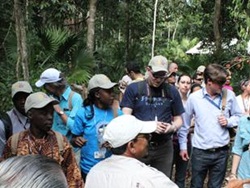
During the visit, more than 40 people - including delegates, researchers, multilateral agencies, members of the civil society and the media learned first hand how the Mayan community, with the support of the GEF Small Grants Programme, BCPR, UNDP, and the local government, is implementing a local risk management strategy as an approach to climate change adaptation and in enhancing the conservation of the flora and fauna of the area. This innovative community project has helped reduce carbon emission by teaching locals how to prevent forest fires after hurricanes (i.e. by collecting downed trees and tree parts that would serve as fuel), constructing firewalls, and most importantly, increasing community awareness and commitment to forest conservation.
The Yum Balam Wild Flora and Fauna Protected Area is located within the Atlantic Hurricane Belt, in an area of high fire incidence with 989 fires recorded to date. In 2005, two category 5 hurricanes (Emily and Wilma) destroyed thousands of trees causing a fire emergency in 2006, which affected 50,000 hectares and reinforced the need for creating a Forest Fire Prevention and Combat Program.
 As a result, the National Commission of Natural Protected Areas (CONANP) and SGP developed a forest fire prevention program surrounding the reserve. Today this is supported by other complementary projects that provide for sustainable livelihoods. Since 1995, the Small Grants Programme in Mexico has supported 40 projects for a total of about US$873,504 in the protected area and its surroundings benefiting approximately 2,500 families from 8 communities.
o date, the government and community efforts to manage the risk of forest fires has proven successful and there have not been any significant fires in the Yum Balam reserve, and its surroundings. Based on the impact of a fire that started after Hurricane Gilbert in 1999, the reserve is avoiding the emission of approximately 54.98 tons of CO2 equivalent per hectare.
The participants also learned about the biodiversity of the area, the Local Risk Management Program and the plans that the community has for the sustainable management of the reserve, which includes payment for ecosystem services and the development of ecotourism, among others.
Article and pictures contributed by Ana Maria Currea, GEF Small Grants Programme